Workshop organised by the Hanns-Seidel-Foundation in Zagreb and the Center for German and European Studies (CGES) at the University of Regensburg on 6 November 2026
With Café Europa on 6 November 2026, the Hanns-Seidel-Foundation, in cooperation with the Center for German and European Studies, launched a new German-Croatian discussion series with students from Zagreb and Regensburg on issues relating to the European integration process. Café Europa is to take place once a year, alternating between the universities of Regensburg and Zagreb.
The aim of this year’s workshop was to discuss with students from the University of Zagreb and the University of Regensburg their attitudes towards Europe and the prospects they see for themselves personally and for their country within the European integration process.
At the same time, the results of a short research task were presented, in which the students explained to what extent Europe or the European unification process features in their studies, and if so, which topics are addressed, and whether they consider it necessary to engage more deeply with questions concerning the present and future of the European project during the course of their studies.
A third area of discussion focused on country-specific differences in perceptions of and attitudes towards Europe.
The workshop drew on the findings of the conference ‘Hope for Europe? Students from Germany, Croatia and South-Eastern Europe on Europe and the European unification process, organised in cooperation with the Hanns-Seidel-Foundation on 29 November 2024. The findings are available in German and Croatian at DE_Hoffnung-Europa.pdf and HR_Europa-kao-nada.pdf
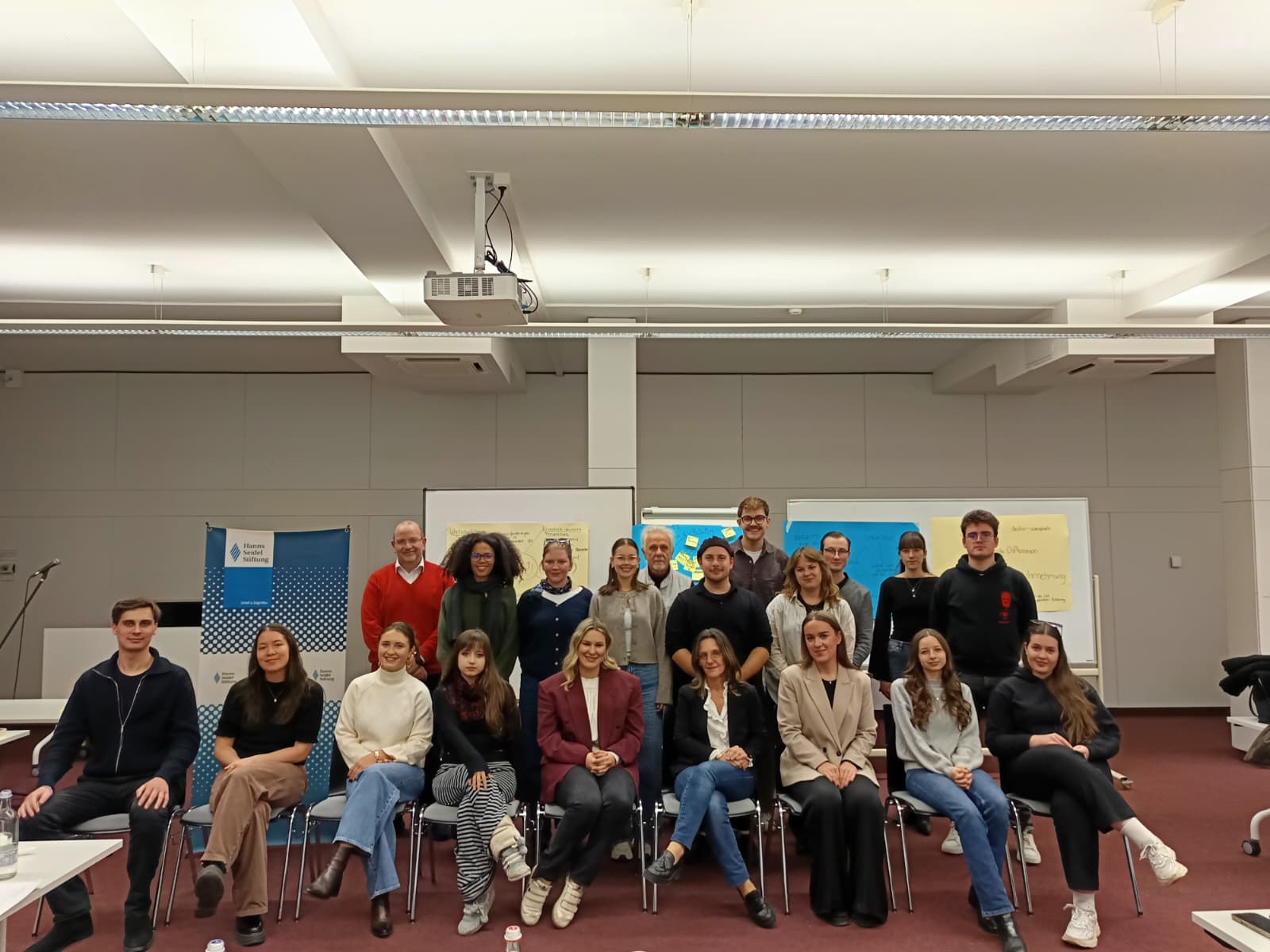
Eighteen students from various departments and faculties at the Universities of Zagreb and Regensburg took part in the workshop. The workshop was led by Prof. Dr Rainer Liedtke, University of Regensburg/CGES, and Prof. em. dr. sc. Siegfried Gehrmann, University of Zagreb/CGES.
At the start of the workshop, the head of the Hanns Seidel Foundation’s office in Zagreb, Ms Aleksandra Markić Boban, MSc, presented the Foundation’s work and scholarship opportunities for students from Croatia.
The workshop was conducted in German.
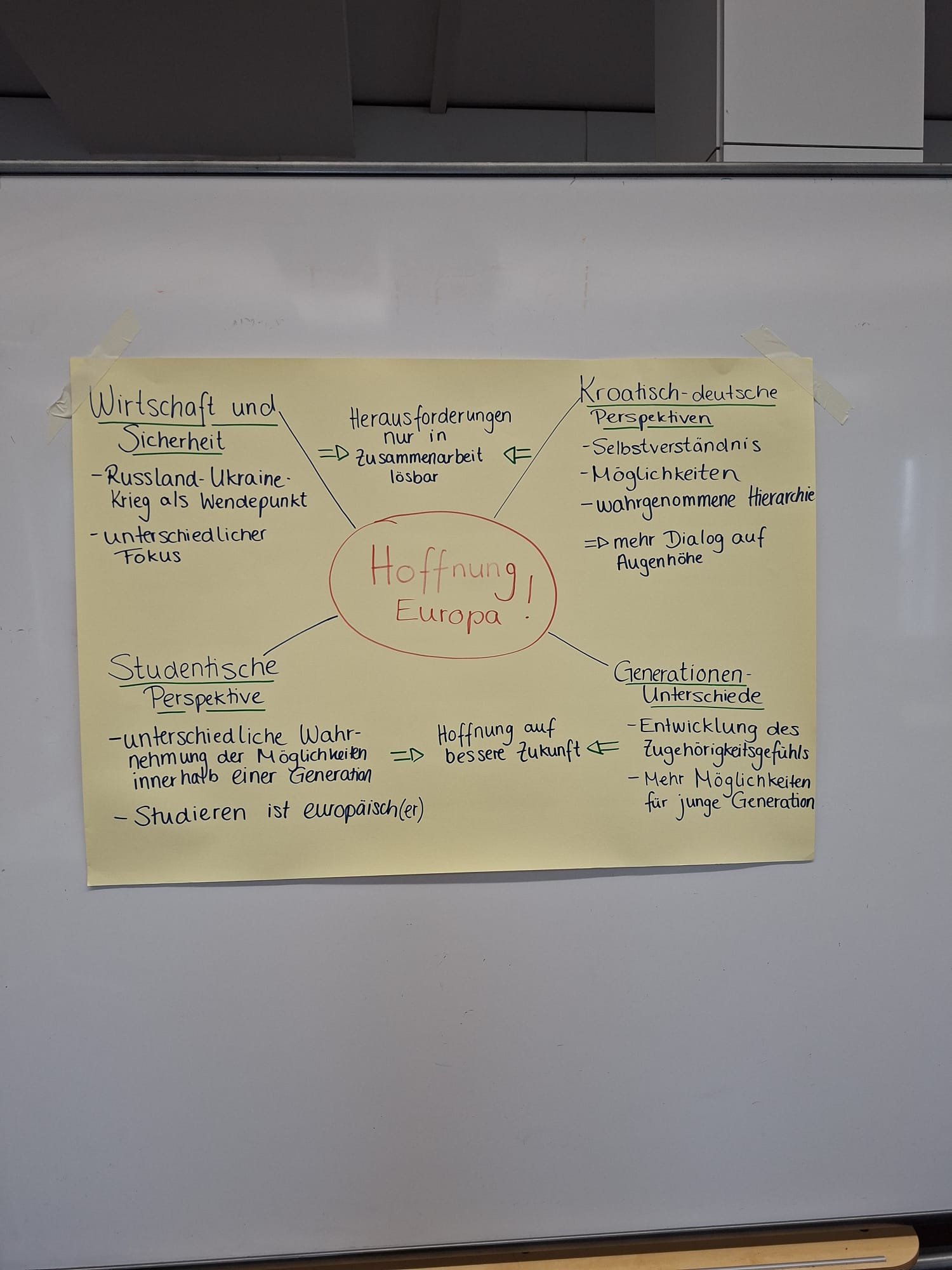
One key finding of the workshop was, on the one hand, the keen interest shown by all students in the European integration process and the fact that both universities do not offer sufficient courses on current issues and conflicts in Europe. On the other hand, it was noted that, due to a historical focus on the West, students from Regensburg had significant gaps in their knowledge regarding Croatia as the newest EU member state and the EU accession countries in South-Eastern Europe. At the same time, the discussions highlighted that the success of the European integration process also depends on the commitment of citizens, and that the universities in both countries need to contribute more to this than they have done so far.
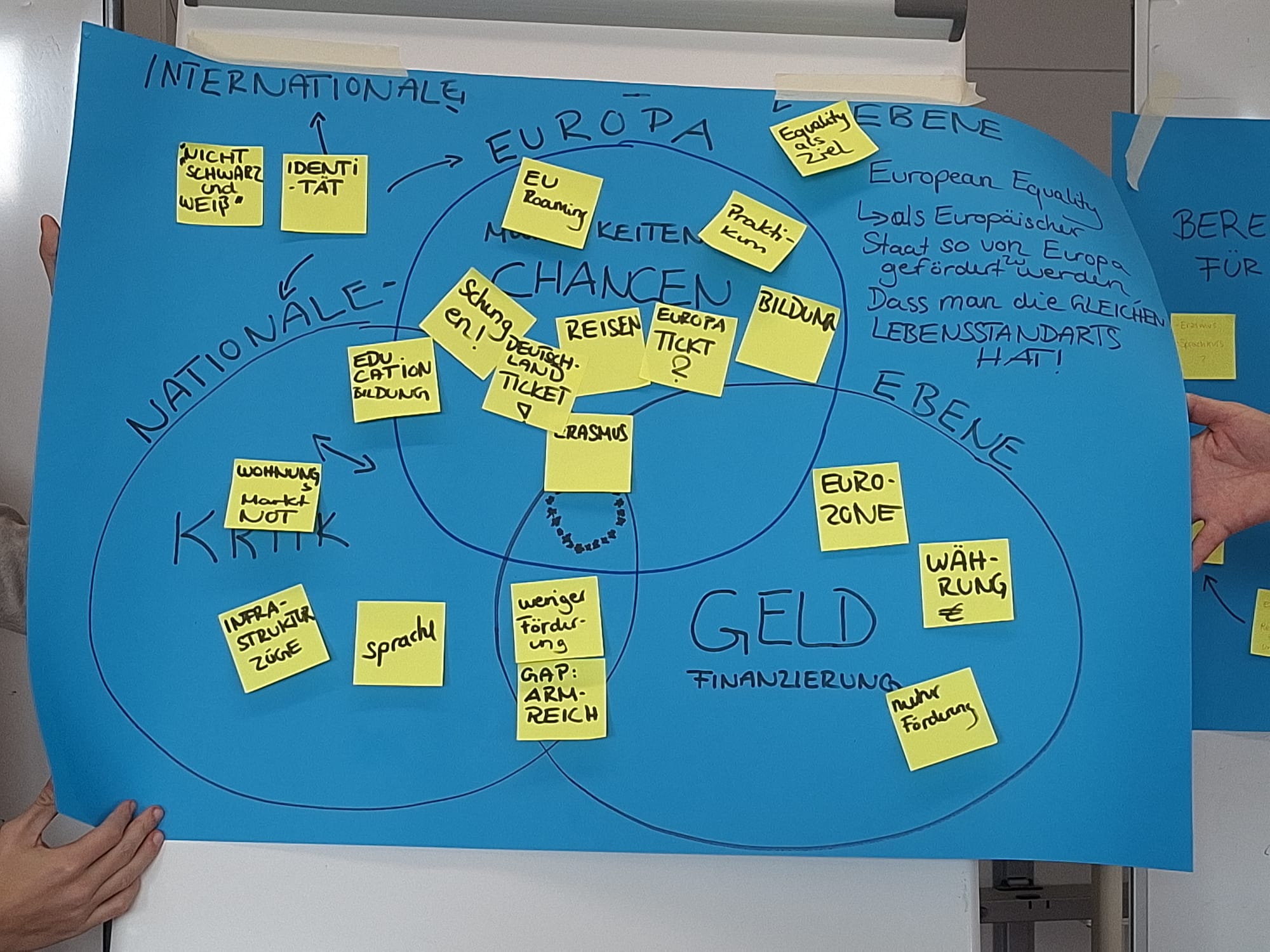
From a student perspective, a further step was taken under the motto ‘Hope for Europe? the opportunities and challenges of the European integration process were discussed in the areas of the economy, security, European values, cultural cooperation and identity, education and migration, as well as the relationship between national and European interests. Whilst there were differing perspectives between the students from Zagreb and Regensburg, both sides emphasised that Europe represents a key economic and peace-building prospect for both countries.
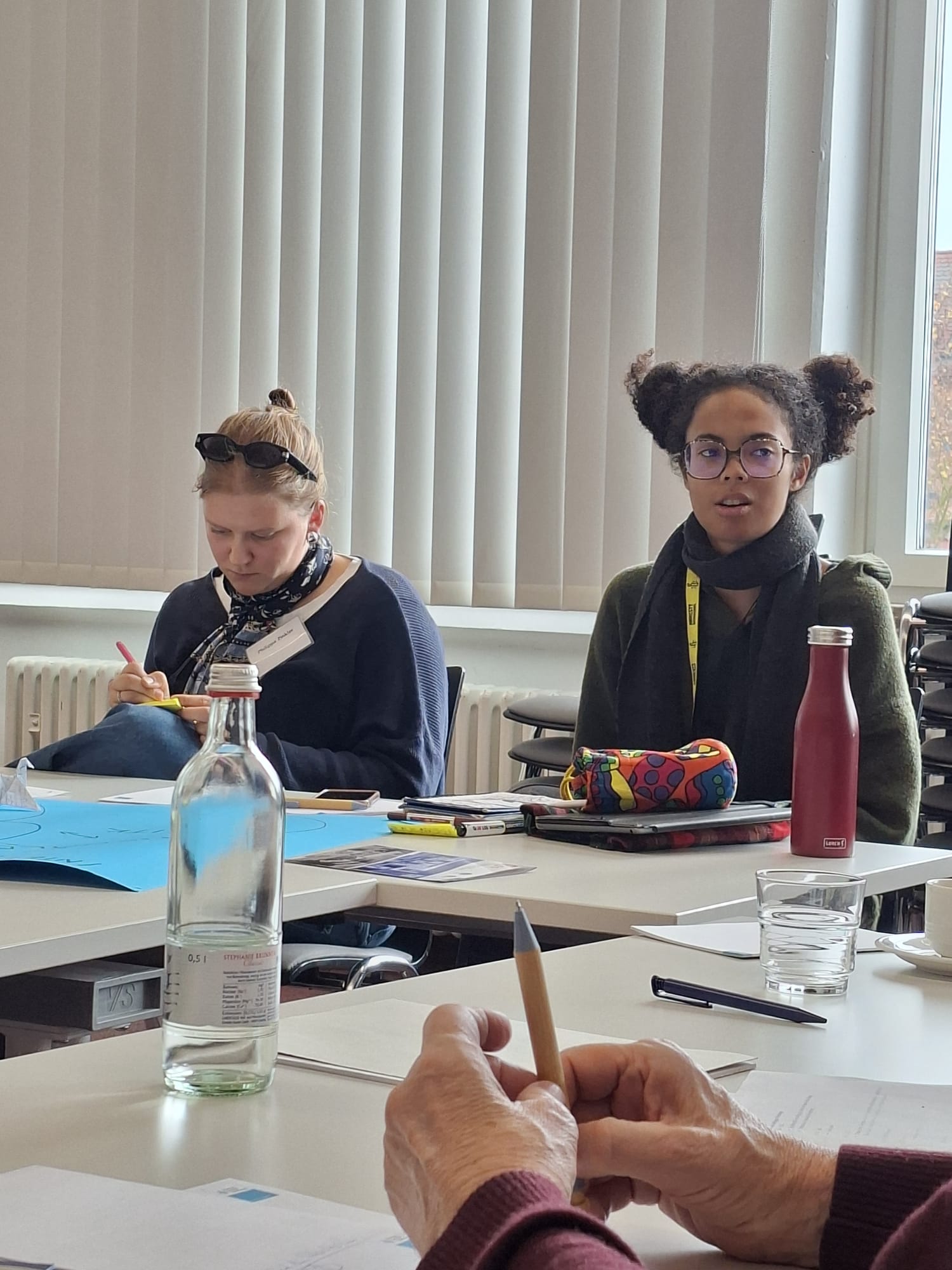
Language difficulties were overcome during the workshop through pair work between students from both universities. They were not seen as a problem but as part of a multilingual and multicultural Europe.
The workshop concluded with a historical guided tour of the city led by Prof. Liedtke and a dinner attended by all participants.
There was a consensus that the ‘Café Europa’ discussion series should continue in 2027 with a new thematic focus.